

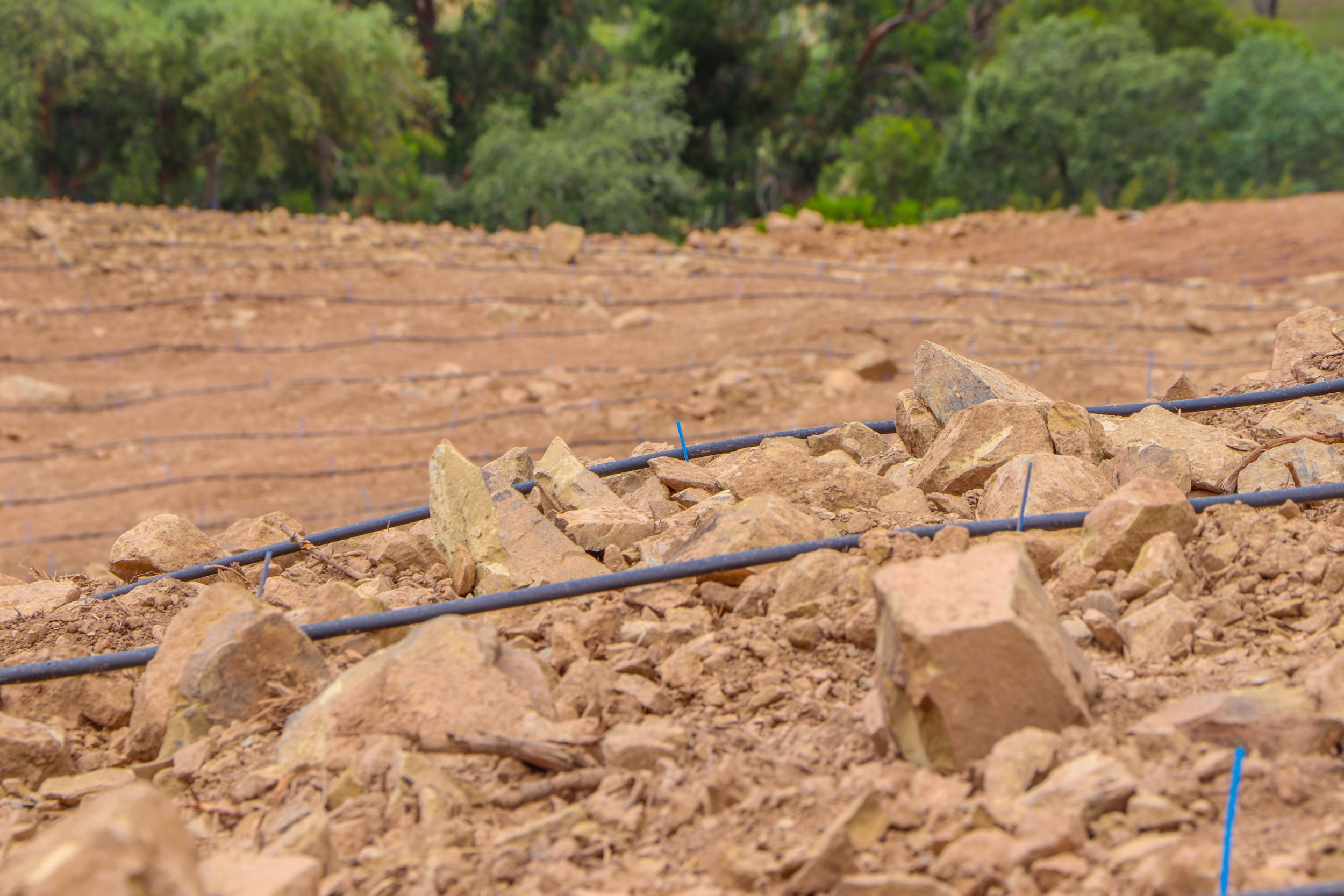
When we speak about great wines, we often discuss grape varieties, vintages, or winemaking techniques. Yet the true story of a wine begins much deeper—beneath the vineyard itself.
At Pêgo da Moura, our wines are born from a unique landscape where ancient schist soils, Atlantic influences, and the Alentejo sun come together to create wines of character, elegance, and authenticity. Understanding our terroir means understanding the very essence of our wines.
What Is Terroir?
The French term terroir has become an essential concept in the world of wine. While there is no perfect English translation, terroir refers to the combination of natural factors that influence a vineyard and ultimately shape the wine it produces.
These factors include:
- Soil composition and geology;
- Climate and weather patterns;
- Topography and elevation;
- Water availability;
- Sunlight exposure;
- Local biodiversity.
Terroir is what gives a wine its sense of place. It is the reason why the same grape variety can produce remarkably different wines when grown in different regions of the world.
At Pêgo da Moura, terroir is not simply a concept—it is the foundation of everything we do.
Ancient Schist: A Geological Legacy
The vineyards of Pêgo da Moura are rooted predominantly in ancient schist soils, formed over hundreds of millions of years through geological processes that shaped the landscape long before the first vines were planted.
Schist is a metamorphic rock characterized by its layered structure. Over time, weathering breaks the rock into thin plates and fragments that create a distinctive vineyard soil.
These soils are often poor in organic matter and nutrients, which may sound disadvantageous at first. However, for viticulture, this scarcity can be a remarkable asset.
Vines thrive when challenged. In less fertile soils, they naturally limit excessive vegetative growth and concentrate their energy on producing smaller, higher-quality grapes with greater flavour intensity.
Deep Roots, Greater Complexity
One of the defining characteristics of schist soils is their ability to encourage deep root development.
The fissured structure of schist allows vine roots to penetrate deep into the ground in search of water and nutrients. Rather than relying on surface moisture, the vines establish extensive root systems that access resources far below the surface.
This deep rooting provides several benefits:
- Greater resilience during dry periods;
- More consistent ripening throughout the growing season;
- Improved nutrient balance;
- Enhanced expression of terroir.
As a result, the wines often display greater complexity, depth, and a more precise reflection of their origin.
Natural Water Regulation
In Mediterranean climates such as ours, water management plays a critical role in vineyard health.
Schist soils possess a unique balance between drainage and water retention. Rainwater can infiltrate through the fractured rock structure, reducing the risk of waterlogging, while deeper layers help retain sufficient moisture to sustain the vine during warmer periods.
This natural regulation allows the vines to experience moderate stress at key moments of the growing season—a condition that is often associated with the production of more concentrated and expressive grapes.
The result is fruit that achieves ripeness while preserving freshness and balance.
Elegance Over Excess
One of the most fascinating effects of schist terroir is the style of wine it tends to produce.
Wines grown on schist soils are often recognised for their:
- Purity of fruit;
- Mineral complexity;
- Structured tannins;
- Fresh acidity;
- Long, persistent finish.
Rather than producing wines of sheer power, schist frequently encourages elegance, precision, and nuance.
At Pêgo da Moura, these characteristics align perfectly with our philosophy of crafting wines that reflect place rather than manipulation. We seek balance over excess, authenticity over uniformity.
The Influence of the Atlantic
While the soil provides the foundation, it is the interaction between schist and climate that truly defines our terroir.
Located between the Serra de Grândola and the Atlantic Ocean, our vineyards benefit from cooling maritime influences that temper the warmth of the Alentejo climate.
The Atlantic breezes contribute to:
- Slower and more even ripening;
- Preservation of natural acidity;
- Enhanced aromatic expression;
- Greater freshness in the finished wines.
Together, the ancient schist beneath the vines and the Atlantic air above them create a rare balance between concentration and freshness.
A Terroir Worth Preserving
At Pêgo da Moura, we believe that great wines begin with respect for the land.
Our responsibility is not to dominate nature, but to work alongside it—understanding the vineyard, listening to the seasons, and allowing the terroir to express itself through every harvest.
The ancient schist soils that define our vineyards have existed for millions of years. Each bottle we produce is a small reflection of that geological history, transformed by vine, climate, and human care.
The Taste of Place
Every vineyard tells a story. At Pêgo da Moura, that story begins in the schist.
It is a story written in stone, shaped by time, and expressed through the vine. A story of resilience, balance, and authenticity.
When you open a bottle of Pêgo da Moura, you are not simply tasting a wine—you are experiencing the character of a landscape that has been forming for centuries beneath your feet.
That is the true power of terroir.